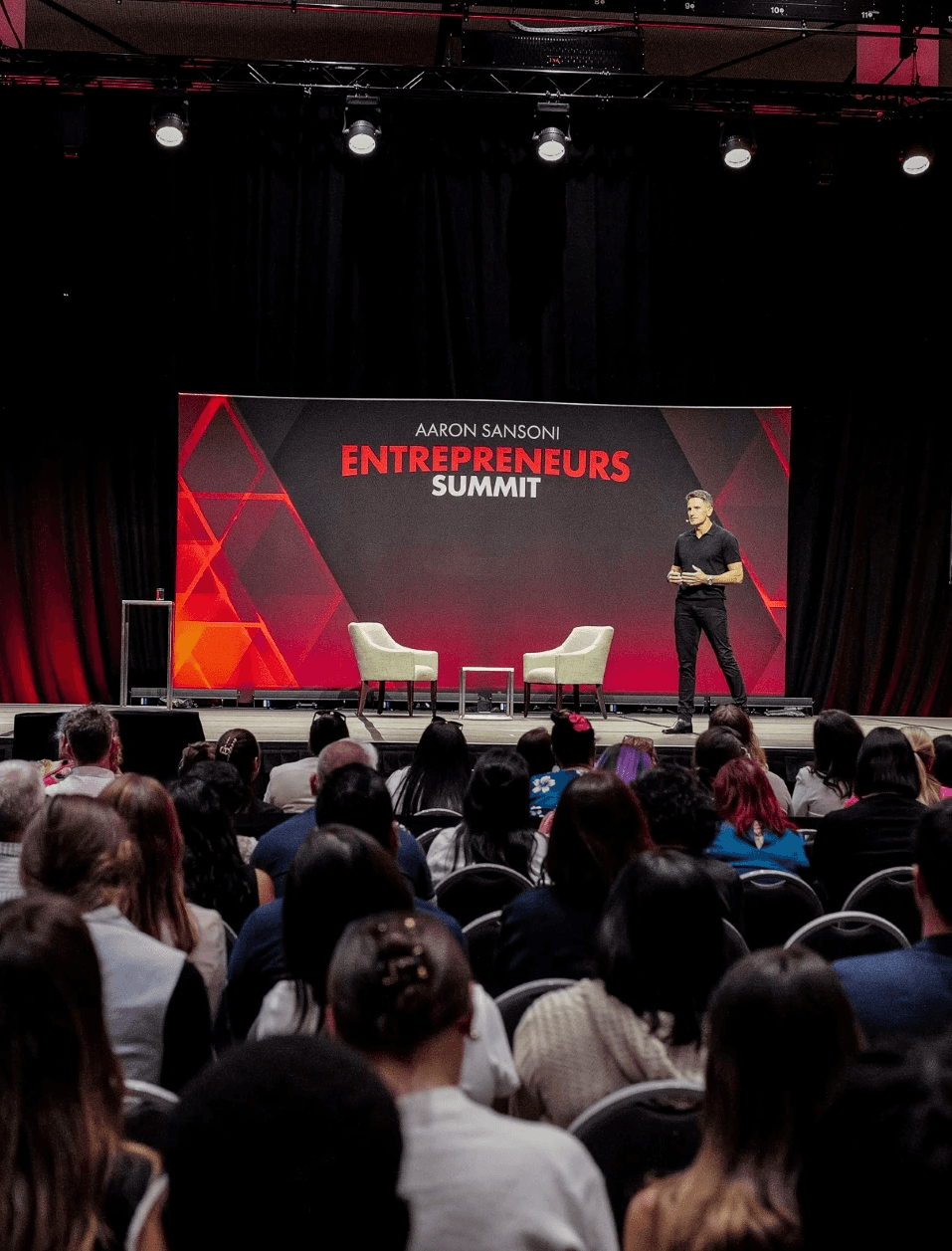
The BusinessAI Operating System
The BusinessAI Operating System
How AI Becomes the New Backbone of SME Performance
Most small and medium-sized businesses are not stuck because they lack ambition, intelligence, or effort.
SMEs are stuck because they are operating without a system.
For decades, large organisations have enjoyed an advantage that had nothing to do with better people. They had infrastructure. They had internal systems, automation, analytics, and teams whose sole job was to make the business run smoothly, repeatedly, and predictably. Work flowed because the organisation was designed to make it flow.
SMEs never had that luxury.
They relied on people holding things together manually. Knowledge lived in heads. Processes lived in inboxes. Execution depended on memory, goodwill, and heroics. When things broke, more people were added. When pressure increased, workdays got longer.
That gap between corporates and SMEs has always existed.
AI is the first time it can actually be closed.
Why AI Has Felt So Disappointing for So Many Businesses
AI has been talked about as a revolution for years. For most business owners, it hasn’t felt revolutionary at all. It has felt confusing, fragmented, and disconnected from the realities of running a business.
That’s not because AI isn’t powerful. It’s because it was presented incorrectly.
AI has been sold as tools, features, plugins, demos, and isolated automations. Each one promises to save time. Each one operates in isolation. Each one requires the business to adapt to the technology rather than the other way around.
Business owners don’t think in terms of tools. They believe in outcomes. They don’t ask which model to use or which prompt is best. They ask what problem this removes from their day, what pressure it takes off their team, and whether it actually changes how the business runs.
Most AI solutions can’t answer that clearly.
The Core Mistake Most Businesses Make
The mistake is treating AI as a tool rather than as infrastructure.
Adding another app, another automation, or another “AI feature” doesn’t change a business's operating model. It just adds complexity to something that is already fragile. It creates more hand-offs, more exceptions, and more places where things quietly fail.
AI only creates leverage when it is systemic.
That means it understands the business. It knows how work actually flows. It has context, memory, and responsibility. It connects processes instead of patching them. It compounds, rather than saving minutes, in isolation.
In other words, AI only works when it is implemented as an operating system.
What the BusinessAI Operating System Actually Is
The BusinessAI Operating System exists to turn AI into the backbone of an SME, not a collection of disconnected experiments.
It is not a chatbot.
It is not a product feature.
It is not a course or a one-off automation.
It is a complete operating model for how AI is introduced, structured, embedded, and governed within a business to improve performance measurably.
The outcome is not “AI adoption.”
The outcome is a business that runs with less friction, fewer errors, faster execution, more substantial margins, and more control.
This is what corporates have always had.
BusinessAI makes it accessible without the dysfunction.
Why Most Businesses Don’t Know Where to Start
When businesses approach AI on their own, they quickly get stuck.
They don’t know which workflows matter most. They don’t know where automation will actually compound, rather than create more work. They worry about breaking systems that already feel fragile. They worry about team resistance. They worry about wasting time and money on something that looks impressive but doesn’t move the needle.
Those concerns are rational.
Most businesses have already been burned by software that promised integration and delivered complexity. They’ve seen vendors disappear. They’ve witnessed automations fail silently. They’ve seen “smart” tools create dumb problems.
What they’re resisting isn’t AI.
They’re resisting chaos.
How BusinessAI Approaches AI Differently
BusinessAI is built around a disciplined sequence that removes guesswork and replaces experimentation with structure.
Everything starts with clarity. Business owners don’t need to become technologists. They need a clear mental model of what AI can do inside their specific business, where leverage actually lives, and what to ignore. Education inside BusinessAI is practical, grounded, and relentlessly focused on tangible outcomes, not hype or futurism.
From there, the focus shifts to strategy. This is where work is mapped honestly, not aspirationally. It’s where hidden bottlenecks, time leaks, and margin erosion are exposed. It’s where automation is properly sequenced rather than scattered. This is the moment most leaders realise how much friction they’ve normalised and how much capacity has been hiding in plain sight.
Then comes implementation. This is where most AI conversations stop elsewhere and where BusinessAI begins. Implementation means building AI agents that actually do work, creating knowledge bases that reflect how the business really operates, automating end-to-end workflows, integrating systems so information flows without humans acting as glue, onboarding teams properly, and managing change deliberately.
This is where AI stops being interesting and starts being useful.
And this is where results show up quickly.
What AI Actually Changes Inside a Business
AI does not replace people. It removes friction.
It takes over repetitive administration, duplicated effort, manual coordination, slow communication, and the invisible cognitive load that drains teams and founders alike. As friction disappears, capacity appears. People stop doing work that never required human intelligence in the first place and start focusing on judgment, relationships, and growth.
Over time, AI becomes a digital team working quietly in the background. It researches, coordinates, analyses, checks, prepares, and supports. It doesn’t get tired. It doesn’t forget. It doesn’t need managing.
That shift compounds.
Why This Changes How a Business Feels to Operate
When AI becomes infrastructure instead of an experiment, something unexpected happens.
Founders feel relief.
Decision fatigue drops. Firefighting slows. The constant sense of holding everything together eases. Teams experience clearer workflows, fewer interruptions, and calmer execution. Work stops bouncing between people unnecessarily. Accountability becomes clearer because the system itself carries more of the load.
This isn’t just an operational upgrade.
It’s a psychological one.
The Discipline That Makes the System Work
BusinessAI operates under three non-negotiable principles.
If something doesn’t work in the real world, it’s useless.
If it doesn’t save time, it doesn’t matter.
If it doesn’t improve margin, it’s noise.
These rules exist to prevent complexity from creeping back in and to keep the system grounded in outcomes instead of novelty.
What Happens Next, With or Without You
Businesses that become AI-native will operate faster, run leaner, and scale without a proportional increase in headcount. They will respond to customers instantly, absorb growth without chaos, and outperform competitors who are still relying on manual systems held together by people.
Businesses that delay will work harder for less return.
Not because they’re bad operators, but because they’re running without infrastructure in a world that now assumes it.
AI is no longer optional.
It is the new operating layer of modern business.
Final Word
Business owners don’t need motivation.
They need leverage.
AI delivers leverage when implemented as a system, not as a collection of tools.
"BusinessAI exists to make sure it is."
👉 linkedin.com/company/businessaigroup
👉 https://www.instagram.com/businessaigroup/
Rhys Henderson
CEO, BusinessAI
